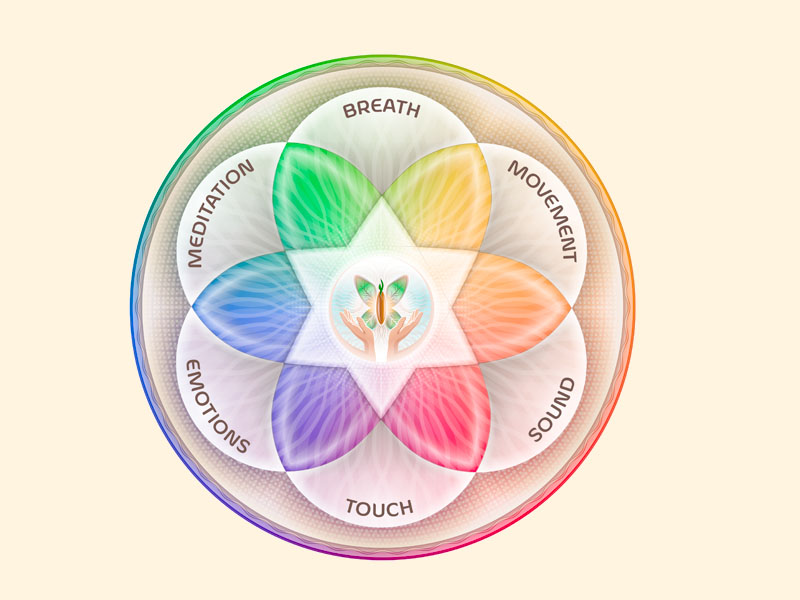
The BioDynamic Breathwork & Trauma Release System® (BBTRS) offers an integrative approach to working with character structures through breath, movement, touch, and emotional release to address deeply held trauma. BBTRS focuses on the connection between emotions and traumatic memories, inviting a deep awareness of the body’s felt sensations. This embodied connection allows for the nervous system to process and release experiences that were once overwhelming.
In the safety of a BioDynamic Breathwork session, individuals can revisit these sensations and memories in a grounded, supportive environment. What was once too painful or too much to process can now be fully experienced, held, and completed through the body, allowing the nervous system to release the tension, stress, and trauma held in muscular armouring. The missing piece during the original trauma—safety—is now provided, not just by the therapist, but cultivated as an internal experience within the person themselves.
As individuals reconnect with their body through breath, they begin to feel that their body is once again a safe place, even in the presence of intense sensations or memories. The process of “befriending” these sensations allows for gradually letting go of protective armour and defensive patterns. By doing so, individuals return to their true essence—experiencing life with greater authenticity and emotional freedom.
The Core Focus of BioDynamic Breathwork and Reichian Character Structures
1) Awareness:
Developing awareness is the first step in melting the body armour. Through body-focused awareness exercises, a person begins to feel and recognize their defence patterns. Insight into the present-day function of these character defences is essential before they can be released. Awareness brings a sense of choice and the ability to respond differently to situations that once triggered defensive responses.
2) Relational Field:
The relationship between the therapist and the person undergoing the process plays a pivotal role in healing trauma. Trauma occurs in a relational context; thus, it must also be healed within one. In BioDynamic Breathwork, the quality of contact and the therapeutic relationship create a container for safely revisiting old wounds, but in a profoundly different holding environment—one filled with presence, safety, and attunement. This grounded relational space helps to unwind old patterns that developed in response to lack of connection, fear, or neglect.
3) Physical Release:
BioDynamic Breathwork integrates a combination of breathwork, touch, sound, movement, and conscious emotional expression to access and release deeply held trauma in the body. These techniques bring awareness to holding areas and help build somatic resources, enabling the nervous system to discharge pent-up tension. As the body experiences physical release, long-held emotions—such as fear, anger, or grief—are allowed to surface and be expressed, completing cycles that were interrupted in the past.
By addressing these three key areas, BBTRS helps individuals to gently and effectively release the trauma that has been locked within their body and mind. As the defences come down, individuals begin to feel a greater sense of freedom and vitality, no longer defined by their past traumas or the rigid structures they once relied on. Instead, they can reconnect with their deeper self and step into a more embodied, present, and authentic way of being.
I have worked with these structures for over twenty years, and what this framework consistently reveals is not who someone is, but what they learned to do with who they are. That distinction matters. The armoring is not the person — it is the protection the person built when they had no other choice. And when it begins to soften, what emerges underneath is not a repaired version of the defended self. It is something that was always there, waiting.
Reich’s five primary character structures — Schizoid, Oral, Psychopathic, Masochistic, and Rigid — each describe a different way we learned to survive. If you want to explore them in depth, you can read about each one below:
- The Schizoid Structure: When Connection Feels Both Essential and Impossible
- The Oral Structure: The Wound of Unmet Needs
- The Psychopathic Structure: Strength Built Over Shame
- The Masochistic Structure: The Weight of Self-Restraint
- The Rigid Structure: Performing for Love
Going Deeper
Understanding your character structure is a beginning — often a significant one. But these patterns live in the body, not just the mind. They were organized in relationship during the earliest years of life, and they can only fully reorganize in relationship. That is not a limitation. It is the most liberating thing I know about this work.
If this framework is opening something for you and you want to go deeper, I’d invite you to start with my free resource series on trauma, the nervous system, and healing. It’s where this work continues.