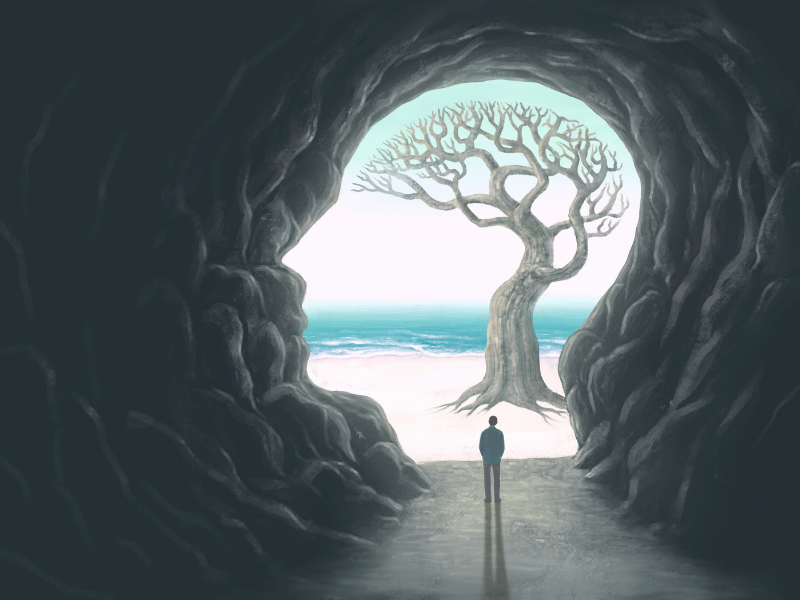
Sometimes the first sign of creativity returning is that we begin to miss something.
We hear music and feel an ache for the dancing we sed to do. We watch someone speak freely and recognize how carefully we have been choosing our own words. We notice the afternoon light falling across a table, and for a moment, we want to stay there. To look. To make something. To have enough room in our lives to be moved.
Then another feeling arrives. Sadness, perhaps. Or the uncomfortable recognition that we have been getting through our days without feeling very much of them.
An opening can feel like this: the bittersweetness of pleasure and pain arriving through the same door.
The imagination we learned to contain
I think of sacred imagination as our capacity to sense possibilities that are not yet fully formed, and to enter into relationship with them. A different way of living. A conversation we have never dared to have. A response to suffering that we cannot yet see clearly but feel called to discover.
The word sacred names the quality of attention we bring. A willingness to listen to something before deciding what it is worth, whether we are good at it, or how it might be useful.
There is vulnerability in that kind of listening.
To imagine a life we want is to feel our wanting. To create something is to risk being seen. To follow an impulse is to step, however briefly, beyond what we already know how to control.
For some of us, those experiences have a history.
Perhaps enthusiasm was met with ridicule. Perhaps we learned to anticipate everyone else’s needs before noticing our own. Perhaps being spontaneous brought consequences, while being agreeable kept us connected.
Over time, we may become very good at interrupting ourselves.
An idea appears, followed immediately by an objection. An impulse to move meets a tightening in the chest. We begin to say something, then decide it does not matter.
This restraint can become so familiar that we mistake it for the absence of creativity. We say, “I’m just not a creative person,” without noticing how much happens between the first flicker of an impulse and our decision to dismiss it.
When the brake begins to come off
The image of a brake can be useful here. Something in us wants to move, while something else has good reasons to hold it back.
We cannot assume that releasing the brake will feel purely joyful.
Sometimes longing arrives first. We discover that we want more intimacy, more expression, more unstructured time. We want to sing, or change our work, or stop pretending that a particular way of living still fits.
Grief can arrive alongside that longing.
We feel the years spent containing ourselves. The opportunities we could not take. The parts of us that received little encouragement and eventually stopped asking.
And often there is vitality in the middle of it all. A spark lights inside us. Anger with something clear to say. An unexpected desire to make dinner for friends, write a page, or walk somewhere without a destination.
Longing, grief, and vitality can arrive together because becoming more available to life also makes us more available to what we have missed.
This is where we can misunderstand an opening. We expect healing to feel better, and when sadness appears, we assume something has gone wrong. We may rush to calm ourselves or turn the experience into a lesson before we have had time to feel it.
There is no need to force that opening. The restraint deserves respect too. Often, it developed when we had fewer choices and less support than we have now.
A spiritual practice that makes room for feeling
Meditation can become a place where we notice these movements within us.
We might feel the beginning of a desire and the judgment that follows it. We might notice ourselves trying to become peaceful when what is actually here is disappointment. We might discover how quickly we leave a feeling by explaining it or trying to figure out the “why” of it.
The invitation is to become curious about that moment.
Can I feel a little of this without demanding that it change? Can I remain in contact with the room around me, the ground beneath me, and the fact that I have choices? Do I need movement, company, or a pause?
There is no spiritual achievement in staying with more than we can bear. Sometimes the most honest practice is to open our eyes, stand up, or reach for someone we trust.
Sacred imagination needs this kind of permission. We have to be able to encounter something unfinished without immediately correcting it. That includes ourselves.
Feeling in a world that needs repair
This has consequences beyond our private lives.
Staying awake and responsive in a world needing repair requires a body that can tolerate feeling. We need some capacity to be touched by what is happening while remaining able to think, relate, and choose our next action.
Numbness and overwhelm both take people out of the conversation, though in different ways. When we are numb, the suffering around us may feel distant or unreal. When we are overwhelmed, it can become difficult to find a response beyond panic, collapse, or compulsively taking in more information.
Neither is a moral failure. Both can signal that what we are encountering exceeds what we can presently hold.
And feeling more, by itself, does not repair the world. We also need discernment, practical skills, collective effort, and places to put our care.
But our capacity to feel helps keep that care alive.
Sacred imagination asks us to remain available to possibilities that fear and exhaustion can make difficult to perceive. What might help here? What could we make together? What have we accepted as inevitable that might still be changed?
We do not have to know the whole answer to participate.
Letting longing matter
Sometimes we know more about what we long for than we allow ourselves to admit.
We want to stop rehearsing what we are going to say. To feel close to someone without hiding the parts of ourselves we fear are too much. To wake up with a sense that the life we are living belongs to us.
It can be painful to let these wishes become clear. Once we acknowledge how much something matters, we also feel the distance between what we long for and how we are living. We may encounter grief, fear, or the familiar voice telling us to be grateful for what we have and stop wanting more.
We can appreciate our lives and still feel something in us asking for change.
This is part of what draws me so deeply to the work of Path of Love: making space for that longing, giving it words, and allowing ourselves to be affected by it in the presence of others.
There is something powerful about hearing yourself say what you truly want, without immediately qualifying it or making it smaller. Especially when someone stays with you as the fear and tenderness come through.
The fire of longing can bring us into contact with both our vitality and the ways we have learned to hold it back. We may feel how much we want to love, and how frightened we are of being hurt. How much we want to be seen, and how quickly we disappear. How ready we are for something to change, even while part of us clings to what is familiar.
In Path of Love, we make room for these encounters. We explore what keeps us from living authentically, with support to feel what arises and begin taking the risks that greater honesty asks of us.
For me, this is sacred imagination becoming lived experience. The possibility we have sensed begins to find expression in our voice, our relationships, and our choices.
If you recognize this longing in yourself, I invite you to explore Path of Love. You do not need to know exactly what needs to change. We can begin with what you are longing for, and what makes it difficult to let that longing matter.